

Women & Children's University Hospital San Antonio TX
4502 Medical Dr • San Antonio • TX
During my two-week residency at the Women’s & Children’s Hospital, I had the privilege of creating a permanent art installation that engaged hospital staff, patients, and visitors in the creative process. The project aimed to reflect the healing environment of the hospital and create a sense of connection through the shared act of weaving."
The plan for this residency was that the work would stay at the hospital. I had a sketch with me, showing the woven flowers and rivers that would form part of the piece, and I eagerly shared it with everyone. The process of creating something that would become a permanent part of the space where it was created by so many different hands felt satisfying. I wanted the work to reflect the unique healing environment, to be a source of comfort and contemplation for everyone who would pass by.
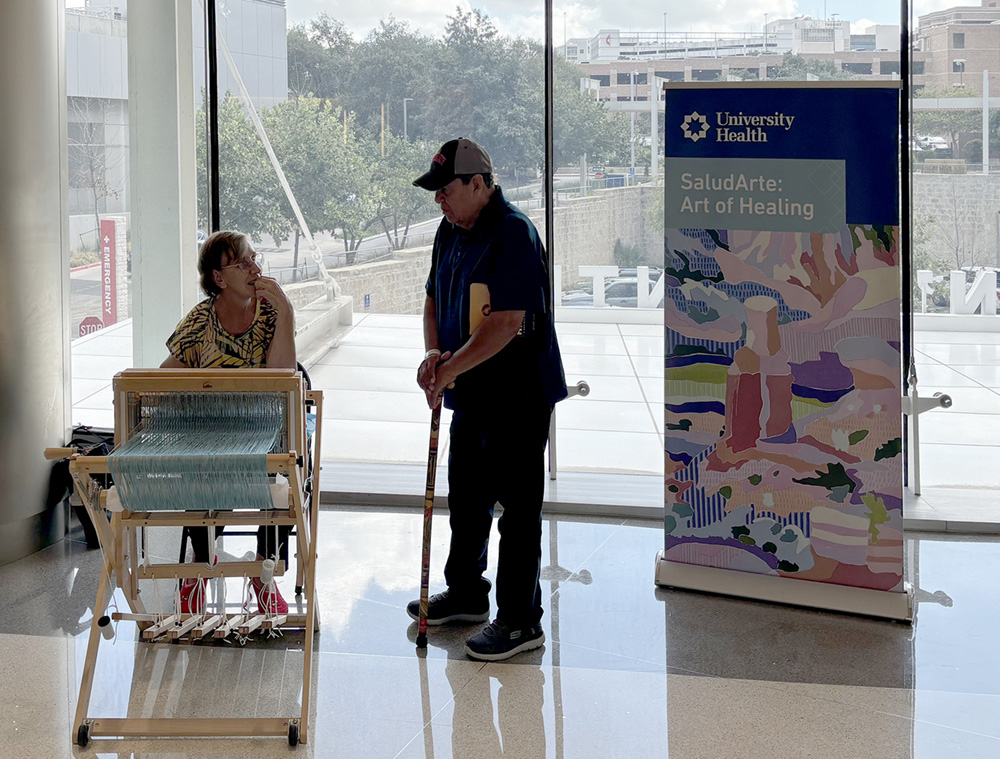
People were fascinated by the looms—often calling them "machines"—and many shared memories of seeing looms in countries like Mexico, India, Romania, and Iran. These conversations always made me smile, as so many had left family members behind who had woven in their homelands, often a generation ago.
Each day, I moved my small loom to different locations, bringing the weaving process to a wider audience. Patients, visitors, and staff alike were curious about the loom, and many stopped to take pictures as they watched the weaving unfold.
One of my favorite places to visit was the Children’s Emergency Entry, where children came to weave. Because they were so small, they couldn’t reach the pedals, so we made it a team effort. I would tread the loom and pass the shuttle back and forth while they used the beater to push the threads into place. They were so absorbed in the process, often for long stretches of time, until their mothers would remind them it was time to leave.
One nurse had heard about my work at the hospital and came over enthusiastically to learn how to weave. It’s always such a joy for me to see how others get excited about the craft I love so much. Sharing a creative process like this one feels like it helps ground everyone involved, even in the midst of challenging times.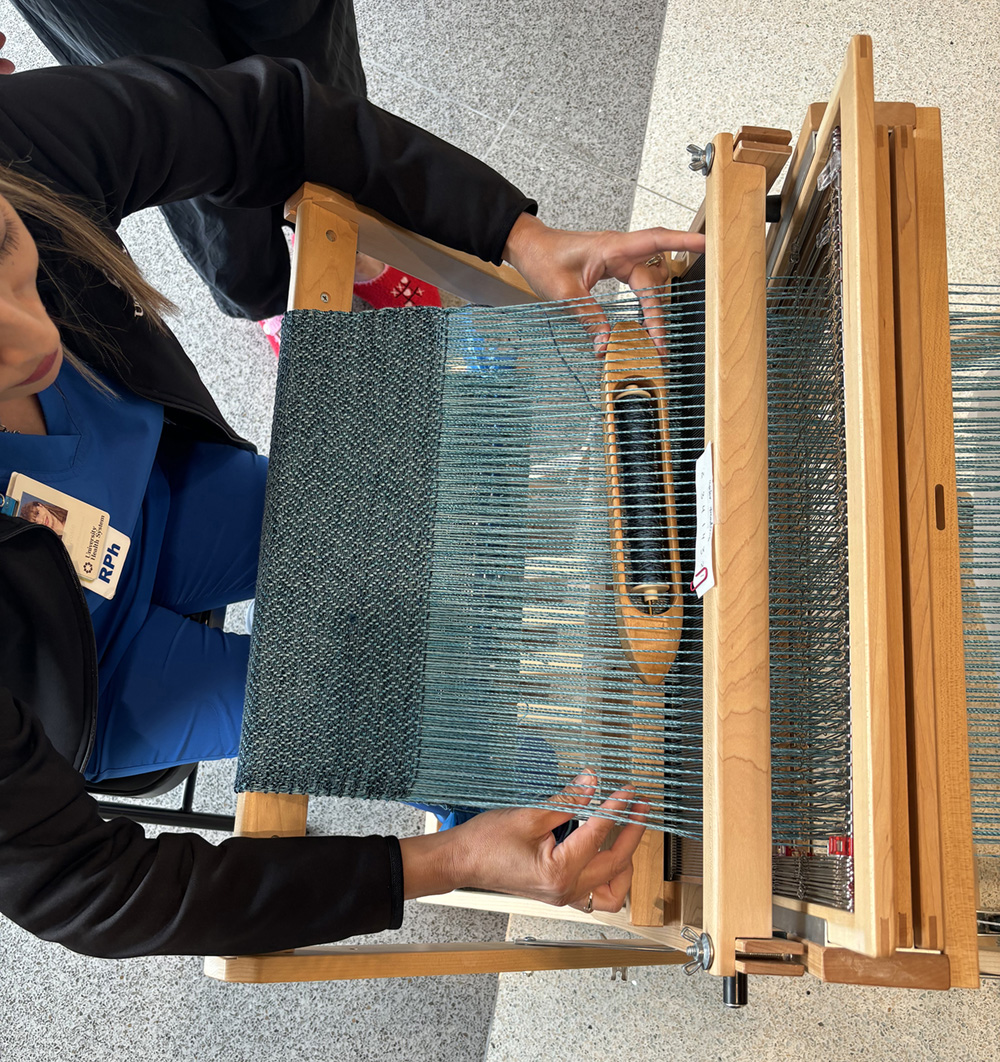
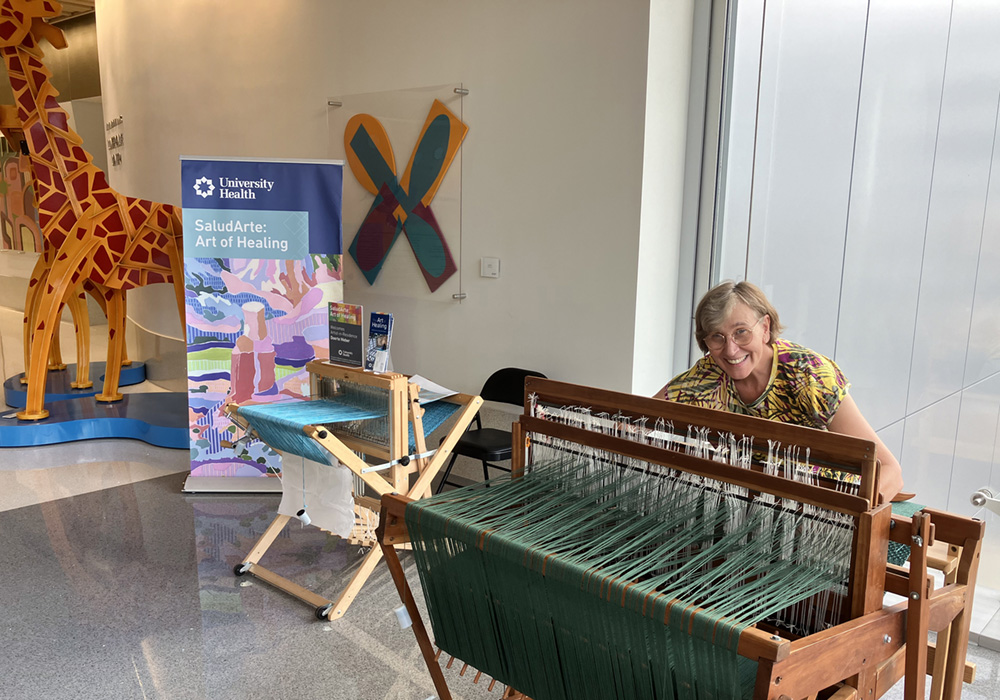
The weekends were a bit different. I’d stay in one spot, working on the flowers on the larger floor loom. Most people who stopped by were attendees of workshops happening in the conference room, but others, who were waiting or visiting loved ones, would drop by to chat or show their children how weaving works. It was a chance for people to slow down, if only for a few minutes, and enjoy something tactile and calming amidst the hustle of hospital life.
I
was also near a giraffe that could move, which became a hit with the younger kids. They would giggle when I made it move and beg me to "do it again." It was a lovely reminder that play, even in a hospital, can bring such joy to a child’s day.

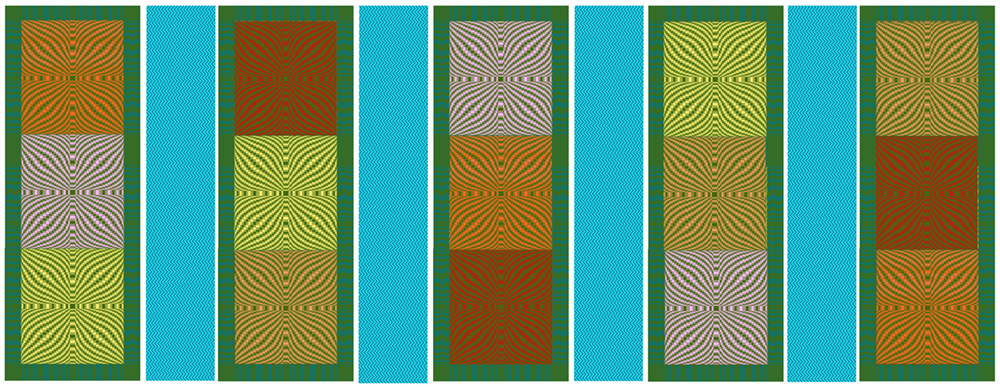
This piece, Surrounding Beauty, draws inspiration from the lifeblood of San Antonio: its rivers and creeks. From the iconic San Antonio River to Medina River, Cibolo Creek, and Salado Creek, these waterways shape the city’s spirit, weaving through its history, culture, and communities.
As a weaver, I sought to reflect this interconnectedness through flowing patterns and textures. The threads echo the currents, with each strand symbolizing the resilience and vitality that rivers and their surrounding ecosystems bring to our lives. The waterway panels were collaboratively woven by a diverse group of individuals—visitors, children, employees, and students of the hospital—each contributing their unique touch to its creation.
Amid these waterways, bursts of color emerge, inspired by the vibrant flora that flourishes along their banks and in nearby gardens—yellow Esperanza, radiant Lantana, delicate pink Buttercup, fiery orange Pride of Barbados, and bold red Salvia, to name a few.
For the flowers, I chose the prominent overshot weaving pattern The Blooming Leaf of Mexico. This centuries-old design, passed down across cultures from Persia to Northern Europe, Spain, Mexico, and beyond, carries a sense of familiarity and tradition.
Installed here at University Women’s Hospital, I hope this work serves as a reminder of the beauty and strength found in nature and community, offering moments of calm and connection to all who pass through.